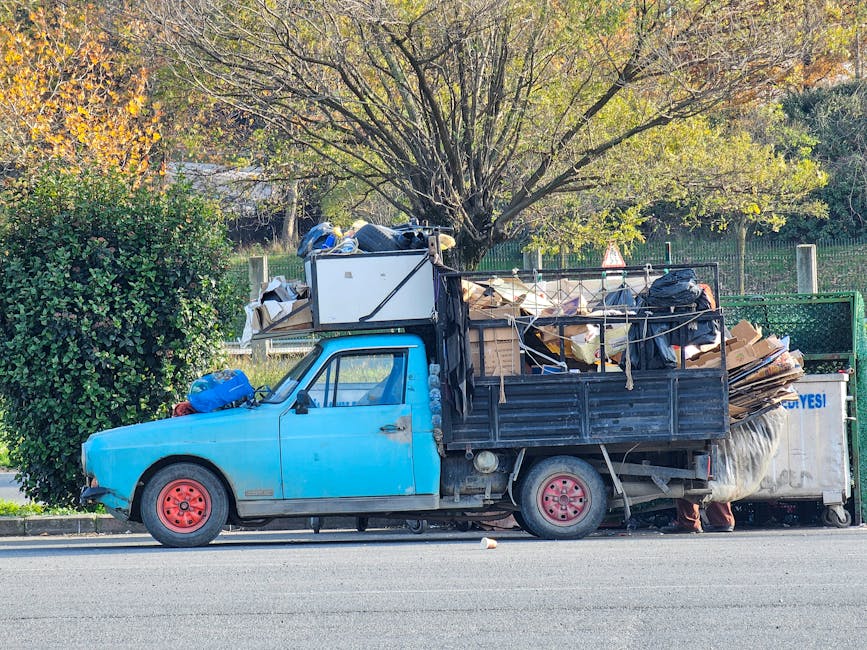
Rubbish collection options for Redhill Road and Salfords
If you live, work, or manage property around Redhill Road and Salfords, rubbish can build up faster than you expect. A shed clears out, a kitchen gets replaced, a garden gets trimmed, and suddenly you are staring at bags, broken bits, old furniture, and a driveway that is not really big enough for the mess. The good news is that there are several rubbish collection options for Redhill Road and Salfords, and the best one depends on the type of waste, how quickly you need it gone, and how much lifting you want to do yourself.
This guide breaks the options down in plain English. You will see what each collection method is best for, where people tend to get stuck, how to choose sensibly, and which practical checks matter before you book anything. If you want a smoother route through the process, it also helps to understand the wider service picture, from house clearance services to smaller, more targeted collections such as waste removal in Caterham. That wider context matters more than people realise, to be fair.
And yes, this is one of those jobs that can feel oddly stressful when you are already busy. The van turns up, the bags are in the way, and someone always says, "We should have done this last month." Let's fix that part first.
Table of Contents
- Why Rubbish collection options for Redhill Road and Salfords Matters
- How Rubbish collection options for Redhill Road and Salfords Works
- Key Benefits and Practical Advantages
- Who This Is For and When It Makes Sense
- Step-by-Step Guidance
- Expert Tips for Better Results
- Common Mistakes to Avoid
- Tools, Resources and Recommendations
- Law, Compliance, Standards, or Best Practice
- Options, Methods, or Comparison Table
- Case Study or Real-World Example
- Practical Checklist
- Conclusion
- Frequently Asked Questions
Why Rubbish collection options for Redhill Road and Salfords Matters
Waste is rarely just waste. On a practical level, it affects space, safety, time, and sometimes even neighbour relations. A few black bags left in a hallway are one thing; a stack of broken units, builders' rubble, and garden cuttings outside a property near a busy road is something else entirely. In a place like Redhill Road and the wider Salfords area, access, timing, and vehicle size can all influence the simplest way to clear rubbish.
The right collection option matters because it helps you match the job to the method. A small household clear-out does not need the same approach as a loft clearance, and a pile of renovation debris is not best handled like general household rubbish. Choose well and the job feels almost straightforward. Choose badly, and you can end up paying twice, lifting more than you expected, or waiting around for a service that does not suit your schedule.
There is also the trust piece. People want to know waste is being handled properly, not tipped somewhere it should not be. That is especially relevant when you are comparing local rubbish collection, skip hire, and full clearance services. A good provider should be clear about what they take, what they cannot take, and how they manage different waste streams. If you are planning a bigger property job, pages like office clearance in Guildford and house clearance across the UK can give a useful sense of how broader clearance work is usually organised.
In short: the best option is not always the biggest one. It is the one that fits the job, the access, and your timeline.
How Rubbish collection options for Redhill Road and Salfords Works
Most rubbish collection services work in a fairly simple way. You identify the waste, get a quote, book a collection slot, and the team removes the items from the agreed location. The detail, of course, is where the real difference sits. Some services only handle bagged waste at the kerbside. Others will collect from inside a property, garden, garage, or commercial space. A few can tackle mixed loads, while others need waste separated first.
For people searching around Redhill Road and Salfords, the main choice usually comes down to three common routes:
- Man and van rubbish collection for flexible, quick removal of mixed waste.
- Skip hire for larger, ongoing, or renovation-heavy projects.
- Full clearance services for when you want the rubbish moved from inside or around a property with minimal hassle.
There are also more specific options for certain jobs. Garden waste, bulky furniture, and builder's rubble are often handled differently because of weight, volume, and recycling requirements. And yes, that detail matters. A sofa and a pile of broken tiles look equally annoying in the corner, but they are not the same in collection terms.
Some collections are priced by volume, some by weight, and some by the type of material. Others are based on access and labour involved. If a team has to carry waste down stairs, through narrow hallways, or from a back garden with tricky access, that can influence the quote. It is not being fussy; it is simply the reality of moving waste safely and efficiently.
For broader local service context, you may also want to look at rubbish collection in Cheam and rubbish removal across Surrey, especially if your collection needs stretch beyond a single postcode or involve multiple locations.
Key Benefits and Practical Advantages
The biggest benefit is simple: you get space back. Yet there is more to it than a tidy driveway or an uncluttered spare room. The right collection option can save you time, reduce physical strain, and prevent the annoying "I'll deal with it later" pile from hanging around for weeks. Truth be told, rubbish has a habit of multiplying when nobody is looking.
Here are the practical advantages people usually notice first:
- Less lifting and dragging if the collection team does the loading for you.
- Faster turnaround when you need waste gone before visitors, tradespeople, or a move.
- Better fit for mixed loads when you have household items, garden waste, and light renovation debris together.
- Reduced disruption compared with leaving a skip on a tight frontage or roadside space.
- More appropriate handling of certain materials if the provider sorts waste for recycling or disposal.
There is also a less obvious benefit: decision clarity. Once you know the options, you stop overthinking the job. You can look at the rubbish, estimate the size of the load, and make a sensible call. That alone can save a lot of faffing about on a Saturday morning.
For property managers, landlords, and small businesses, reliable collection can also make a space presentable again fast. That matters when you are preparing for a new tenant, turning over an office, or clearing after a refit. If that sounds like your world, office clearance services and house clearance in Surrey may be worth exploring as part of a broader planning mindset.
Who This Is For and When It Makes Sense
This kind of collection is useful for a fairly wide range of people. Homeowners are the obvious group, but they are not the only ones. In practice, anyone who needs waste removed quickly, safely, and without turning the day into a logistics exercise can benefit.
It makes sense if you are:
- clearing out after a move
- getting rid of old furniture or appliances
- renovating a kitchen, bathroom, or utility room
- tidying a garden after a big cut-back
- managing end-of-tenancy or landlord clearance
- clearing an office, workshop, garage, or storage unit
- dealing with mixed items that do not fit neatly into ordinary household bins
It is also a sensible choice when access is awkward. Long drive? Narrow side passage? Shared parking? Tight schedule? These little details are exactly where a tailored collection beats a one-size-fits-all arrangement. You do not want a plan that looks great on paper but turns messy when the truck arrives and there is nowhere to turn. Happens more than people admit.
If you are unsure whether your waste is a simple domestic load or something more involved, start by listing the materials and the approximate quantity. A rough list is usually enough to narrow down the right service. Nobody needs an engineering drawing of the pile, just a honest look at what is there.
Step-by-Step Guidance
Here is the cleanest way to approach rubbish collection for a Redhill Road or Salfords property without overcomplicating it.
- Identify the waste type. Separate general household rubbish, bulky items, garden waste, and heavier building materials if possible.
- Estimate volume. A small load, medium load, and full property clear-out each tend to suit different collection methods.
- Check access. Think about parking, stairs, gates, narrow paths, and how close a vehicle can reasonably get.
- Decide what level of help you want. Do you want a team to load everything, or do you only need a collection vehicle or skip?
- Ask about restrictions. Some materials may need special handling. Batteries, chemicals, paint, and electrical items often require extra care.
- Get a clear quote. Make sure the price basis is understood: volume, weight, labour, or access.
- Prepare the waste if needed. Stack items sensibly, keep pathways clear, and remove personal items from furniture or drawers.
- Confirm the collection time. If the job is time-sensitive, make sure the schedule works for you and anyone else on-site.
A small but useful tip: take a photo before you book. Not because anyone expects perfection, but because a quick image often explains the job faster than a long message. It also reduces surprises later. Handy, really.
For larger domestic jobs, a more complete service such as waste removal in Coulsdon or house clearance can be the better fit, especially if you want everything taken in one visit.
Expert Tips for Better Results
A few small choices can make the whole process smoother. In our experience, the people who have the easiest collection day are usually the ones who prepared just enough, not too much and not too little.
Start with the awkward items. Sofas, wardrobes, mattresses, and white goods tend to dictate the shape of the job. If those are included, the rest becomes easier to assess.
Separate what can be recycled. Clean wood, metal, cardboard, and green waste are often easier to process when kept apart from mixed rubbish. You do not have to sort everything into a lab sample tray, obviously, but a little separation helps.
Think about access before collection day. A clear path saves time and reduces the risk of damage. It also makes the team's job safer, which everyone appreciates on a wet Tuesday when the ground is a bit slippy.
Be honest about the load. Understating the amount of waste tends to cause delays or extra charges. Best to be clear from the start. Nobody enjoys the "actually, there's a bit more round the back" moment.
Keep an eye on timing. If you are clearing before decorators, estate agents, or tenants move in, leave more buffer time than you think you need. Jobs always seem quicker until the house starts coughing up one more bag, then another, then another.
One more thing. If you are comparing local services, ask whether they handle full loading, waste transfer, and disposal in one process. That can simplify everything, especially for busy households and small businesses. If the job is business-related, pages such as office clearance across the UK can be a useful point of reference for what a more structured service should feel like.
Common Mistakes to Avoid
Most rubbish collection problems come from small assumptions. Nothing dramatic. Just a few easy-to-miss details that snowball later.
- Assuming all waste is treated the same. It is not. Mixed waste, hazardous items, and heavy materials often need different handling.
- Not checking access properly. A van may be suitable in theory, but parking or narrow entry points can change the plan.
- Leaving it until the last minute. Rush jobs tend to cost more in stress, if not money.
- Forgetting about hidden waste. Sheds, lofts, under stairs cupboards, and garden corners have a funny habit of producing extra bags.
- Choosing on price alone. The cheapest option is not always the best once labour, restrictions, and disposal type are considered.
- Ignoring special items. Fridges, paint, tyres, and certain electricals may need separate arrangements.
Another common slip is assuming the collection team can simply "take everything." In reality, there are sensible limits. A well-run service should explain those limits clearly, which is exactly what you want. Clear boundaries are not a nuisance; they are a sign the provider knows what they are doing.
Tools, Resources and Recommendations
You do not need much to organise rubbish collection well, but a few simple tools help a lot.
- Phone camera: take wide shots and close-ups of the waste.
- Basic tape measure: useful for bulky items and awkward access points.
- Notepad or notes app: jot down what the load contains.
- Gloves and sturdy footwear: sensible if you are moving items yourself.
- Labels or separate piles: handy for sorting recyclable and non-recyclable waste.
For service planning, it also helps to understand the difference between a simple collection and a larger clearance project. A smaller mixed load may suit a targeted collection, while more extensive jobs can be better handled through broader services such as property clearance in London or rubbish removal in Coulsdon depending on location and scope.
Recommendation-wise, the safest approach is usually this: describe the waste clearly, share photos if you can, ask what is excluded, and confirm how the final price is calculated. Simple. Not glamorous. Very effective.
Law, Compliance, Standards, or Best Practice
Waste handling in the UK is not something to take casually. You do not need to become an expert in environmental law to book a collection, but it does help to understand the basics. Any reputable rubbish collection service should be able to explain how waste is transferred and disposed of responsibly, and they should be careful about materials that need special treatment.
From a customer point of view, the most sensible best practice is to ensure the service you use is clear about:
- what types of waste they can take
- how they handle restricted items
- whether items are reused, recycled, or disposed of
- how prices relate to volume, weight, or labour
- what happens if the waste differs from the description provided
If you are a landlord, business owner, or managing agent, the responsibility for choosing a lawful waste route becomes more important. That means keeping records, using a provider that works transparently, and avoiding anything that feels vague or rushed. Nothing fancy, just good practice.
Some items are commonly treated with extra caution, such as paints, solvents, oils, batteries, fluorescent tubes, and certain electrical goods. If you are unsure, ask before collection day. Better a quick question than a last-minute problem on the pavement.
Options, Methods, or Comparison Table
Here is a straightforward comparison of the main rubbish collection options people usually consider around Redhill Road and Salfords.
| Option | Best for | Pros | Watch out for |
|---|---|---|---|
| Man and van collection | Mixed household waste, small-to-medium clearances, quick turnarounds | Flexible, loading included, usually suited to awkward access | Price can rise if the load is larger or heavier than expected |
| Skip hire | Renovations, ongoing projects, large amounts of inert or mixed waste | Good for multi-day use, useful when you are generating waste gradually | Needs space, permit considerations, and self-loading |
| Full property clearance | House moves, probate, end-of-tenancy, office or garage clearance | Low effort for the customer, suitable for large or complex jobs | May cost more than a basic collection, but often saves time and stress |
| Specialist item removal | Bulky furniture, appliances, or specific waste types | Focused, efficient, useful when only one category of item needs removal | May not suit mixed loads without additional services |
If you are torn between options, ask yourself one question: do I want to do the loading myself, or do I want someone else to do the heavy lifting? That single answer often narrows the choice more than any price list can.
Case Study or Real-World Example
Here is a realistic example. A family in the Redhill Road area has finished a kitchen update. They now have an old dishwasher, packaging, a few cupboard carcasses, broken tiles, and a growing pile of general household rubbish from the clear-out. They do not want a skip sitting outside for several days, and the driveway is not ideal for a larger container anyway.
In that situation, a man and van style rubbish collection is often the neater solution. The load can be assessed in one go, the items can be removed from the kitchen or side access point, and the customer does not have to coordinate separate trips to the tip. If the job had been larger, or if they were clearing multiple rooms, a full clearance service might have made more sense. Small difference, big result.
Another example: a small business in Salfords is clearing an office storeroom full of obsolete chairs, cardboard, filing cabinets, and old electronics. They need the space free before a contractor arrives the next morning. In that case, a more structured clearance service is the better fit because speed, loading, and responsible sorting all matter at once.
The pattern is pretty consistent. The more mixed, bulky, or time-sensitive the waste, the more value you get from a flexible collection service rather than trying to piece the job together yourself.
Practical Checklist
Use this before you book a collection. It keeps things simple and avoids those small, annoying surprises.
- Have you listed all the waste that needs removing?
- Do you know whether the load is mostly household, garden, builder's, or mixed?
- Have you taken photos from a few angles?
- Is access clear for the collection vehicle and the loading team?
- Have you separated out anything potentially restricted or delicate?
- Do you know whether you want loading included?
- Have you asked how the price is calculated?
- Do you need the collection on a specific day or within a tight time window?
- Have you checked for items hidden in lofts, cupboards, garages, or the garden?
- Are you clear on what will happen to recyclable materials?
If you can tick most of those off, you are in a good place. Not perfect, maybe, but good enough to avoid the usual headaches.
Get a free quote today and see how much you can save.
Conclusion
Choosing between the available rubbish collection options for Redhill Road and Salfords becomes much easier once you match the service to the job. Small mixed loads, bulky items, garden clear-outs, renovation waste, and full property clearances each have a method that fits best. The aim is not just to get rid of the rubbish. It is to do it cleanly, safely, and without wasting time or money.
If you remember only one thing, make it this: the right collection is the one that suits your waste, your access, and your schedule. That is where the real value sits. Everything else is just noise.
And once the space is clear, the air feels different somehow. A bit lighter. A bit calmer. Honestly, that part never gets old.
Frequently Asked Questions
What are the main rubbish collection options for Redhill Road and Salfords?
The main options are man and van collection, skip hire, full property clearance, and specialist item removal. The best choice depends on the type of waste, how much there is, and whether you want loading included.
Is man and van rubbish collection better than skip hire?
Not always. Man and van is often better for flexible, mixed loads and awkward access. Skip hire can be better for larger renovation jobs or waste you will build up over several days. The right choice depends on your project, not just the label.
How do I know which rubbish collection service I need?
Start by listing the waste type, estimating the volume, and checking access. If you want someone to do the lifting, a collection or clearance service is usually more practical than skip hire. If you are unsure, photos help a lot.
Can rubbish collection include furniture and appliances?
Yes, many collections can include furniture, mattresses, and appliances, although certain items may need special handling. It is always worth confirming this in advance, especially for fridges, freezers, or electrical goods.
What happens if my waste is heavier or more than I described?
That can affect the quote or require a revised plan. Honest descriptions and photos reduce the chance of surprises. If the load turns out larger on the day, a reputable provider should explain the options clearly before going ahead.
Do I need to sort my waste before collection?
Not always, but light sorting helps. Separating recyclables, garden waste, and heavy materials can make the job smoother and sometimes more cost-effective. It also helps the team process the waste properly.
Is rubbish collection suitable for end-of-tenancy clear-outs?
Yes, absolutely. End-of-tenancy jobs often involve mixed waste, old furniture, and leftover items in cupboards or sheds. A full or partial clearance service is often the easiest route for that kind of job.
What should I check before booking a collection?
Check the waste type, approximate volume, access, timing, and what is excluded from the service. Ask how the price is calculated and whether loading is included. Those few questions remove most of the uncertainty.
Can rubbish collection help with garden waste in Salfords?
Yes, garden waste collections are common, especially after pruning, landscaping, or seasonal tidy-ups. Branches, soil, turf, and green cuttings may be treated differently, so it is best to confirm the material mix before booking.
Are there items rubbish collectors cannot take?
Usually yes. Restricted items often include hazardous materials, chemicals, certain batteries, and some special wastes. The exact list varies by provider and waste type, so you should always ask before collection day.
Will I get a better price if I combine several waste types into one collection?
Sometimes, yes, especially if the provider can handle mixed loads efficiently. But if the waste includes restricted or heavy items, separate handling may be needed. A clear description usually gives the most accurate quote.
How quickly can rubbish be collected?
That depends on availability, load size, and access. Some jobs can be arranged quickly, while larger or more specialised collections need more planning. If timing matters, say so upfront.
What is the safest way to prepare rubbish for collection?
Keep pathways clear, stack items neatly if you are able, and remove personal belongings from furniture or drawers. If there are heavy objects, do not lift beyond your comfort level. Safety first, always.
Is rubbish collection a good option for landlords and property managers?
Yes. It is especially useful for end-of-tenancy work, abandoned items, and quick turnaround between occupiers. A dependable clearance can save time and reduce disruption when a property needs to be ready fast.