House Clearance Reigate — Health & Safety Policy
 This Health and Safety policy sets out the commitments and procedures of our house clearance operation. The purpose of this document is to ensure that all house clearance services, rubbish removal and related site activities are carried out safely, lawfully and consistently. The policy applies to every employee, contractor and temporary worker engaged in house clearance in our coverage area and to any visitors or members of the public who may be affected by our work. This statement affirms our commitment to minimising harm, preventing environmental damage, and achieving high standards of workplace safety.
The policy objective is to prevent accidents and work-related ill health through systematic risk management and the promotion of safe working practices. It is designed to align with applicable statutory responsibilities without relying on localised legal detail. Key aims include reducing manual handling injuries, controlling exposure to hazardous substances, managing vehicle and equipment safety, and ensuring appropriate waste segregation and disposal for the rubbish collection and clearance industry. All employees must familiarise themselves with this policy and follow its provisions as part of their duties.
 Responsibilities are distributed across the organisation to ensure clarity and accountability. The management team shall:
- Ensure adequate resources for health and safety measures.
- Maintain documented risk assessments and method statements for each clearance.
- Provide and verify training, supervision and competence.
Risk Assessment, Training and Safe Systems
Risk assessments will be carried out for each clearance task and reviewed whenever conditions change. Assessments identify hazards such as sharps, biological contamination, asbestos suspects, unstable structures, manual handling risks and traffic exposure during roadside collections. Controls will be applied according to the hierarchy of risk control, with elimination and substitution preferred, followed by engineering controls, safe systems of work and finally appropriate personal protective equipment (PPE). Training must cover manual handling techniques, hazardous waste recognition, sharps awareness, and vehicle loading and securing.
 Competence is maintained through induction, refresher training and supervised on-the-job assessment. Specialist training is required for operatives who handle chemical wastes, electrical items, or potential asbestos-containing materials. All staff must be familiar with the correct use and maintenance of lifting aids, trolleys and mechanical handling equipment used in house clearances. A documented training matrix shall be kept and updated to reflect qualifications, training dates and competencies for rubbish clearance teams.
Safe systems of work include pre-start checks, use of job-specific method statements, and traffic management plans where appropriate. A permit-to-work system will be introduced for high-risk activities. Supervisors are responsible for ensuring work proceeds only when controls are in place and for stopping operations where safety is compromised. Employees must not undertake tasks beyond their capability or without necessary supervision.
Waste Handling, Vehicles, Incident Management and Review
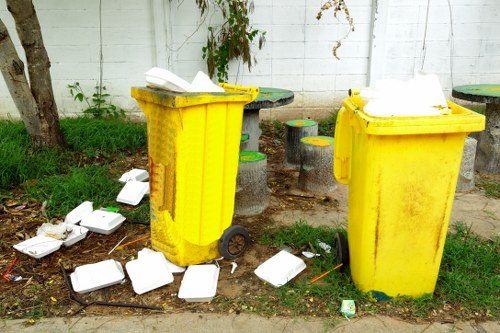
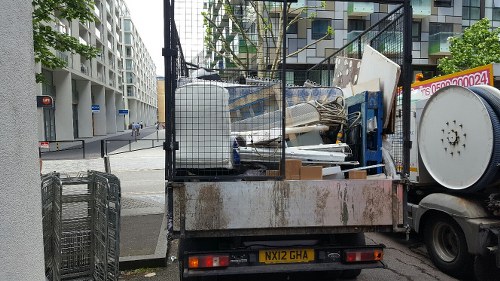
Waste categorisation and segregation are central to compliance. Non-hazardous household waste is separated from recyclable materials, bulky items, and clearly identified hazardous wastes. Hazardous wastes are handled only by trained personnel and disposed of through authorised channels in compliance with environmental obligations. Vehicle safety is essential: vehicles used for rubbish removal must be roadworthy, regularly inspected, and loaded in a way that prevents shifting loads and falling debris. Drivers and loaders shall follow safe loading procedures and ensure that security of loads is checked before departure.
 Incident reporting and investigation procedures are established to learn from near misses and accidents. All incidents shall be recorded, investigated, and corrective actions implemented to reduce recurrence. First aid provision, emergency response plans and clear arrangements for contacting emergency services are maintained; operatives are instructed in basic first aid and spill response where relevant. Specific controls for biological hazards, such as the handling of soiled materials and sharps, include the use of puncture-resistant containers and hygiene protocols to reduce infection risk.
 Monitoring, audit and continual improvement form part of governance. Health and safety performance indicators, including training completion rates, incident frequency, and audit findings, are monitored and reported to senior management. The policy will be reviewed at least annually or following significant changes to operations, regulations or after a serious incident. All employees are encouraged to contribute to safety improvements and to participate in toolbox talks and safety briefings. This policy is a living document: adherence and active engagement by everyone involved in house clearances, rubbish removal and related services are essential to protect people, property and the environment.
Signed: (Authorised Representative) — Policy approved and issued for implementation; this document remains subject to periodic review and update.
